

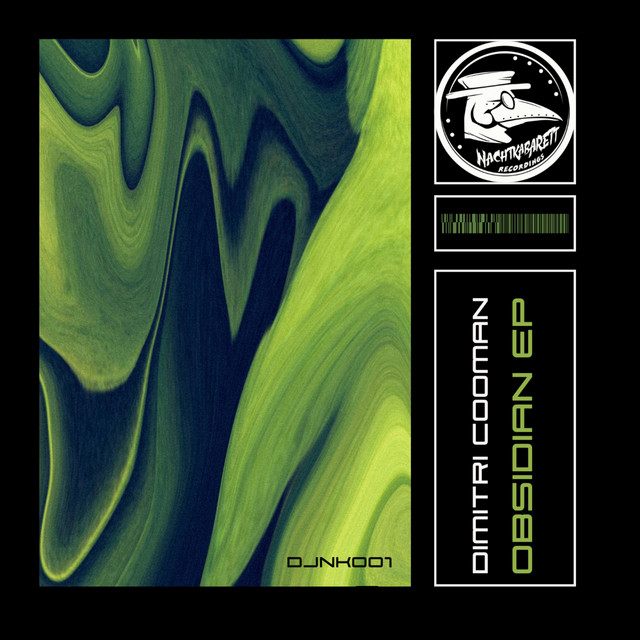
Belgian techno never really left the room. It just keeps finding new rooms. While peak-time techno still dominates festival lineups, a lot of DJs and producers are circling back to the darker, more spatial side of the genre: Dub Techno atmospheres, Detroit-style machine pulse, and tracks built to last longer than a single drop. That is the lane Dimitri Cooman is working in with Obsidian.
Born near Brussels and raised in Aalst, Cooman fell into music early. House and techno became serious business once he started going out to small venues and raves at 16. Then came Cherry Moon. One visit to the legendary Belgian club, and the combination of room, crowd and sound stuck. He has said it plainly: the club, the people, the music. That love did not fade when the original venue closed. He stayed with the Cherry Moon sound across Belgium, became an official resident, and is now one of the people driving the events, the tours, and the techno imprint Cherry Moon Records.
He also runs his own night, Techno Avenue, which gets broadcast on Galaxie Radio Belgium. On the release side, his name already sits on Cherry Moon Records plus Berlin’s Db130, SMR Underground, Strohm Records, Bonzai and Ithica Records, with more in the pipeline. That is not a tourist CV. That is someone who grew up inside a specific Belgian club lineage and kept building from it.
Obsidian arrives tagged as Techno, Dub Techno and Detroit Techno. Those three labels already tell you a lot about how to listen. Classic techno gives you the functional drive. Dub Techno pulls the space open: delay, depth, that sense of a kick travelling through a bigger room than the one you are standing in. Detroit Techno brings the steel and the swing, the idea that a machine groove can still feel human. Put together, you get a track aimed at the long haul rather than the cheap climax.
That mix makes sense for 2026. A lot of the current conversation in underground techno is about texture again. DJs want records that can sit in a peak set without sounding like every other peak record. Dub Techno never really disappeared, but it is back in play as a way to add air and tension. Detroit’s influence is just as present: rolling drums, unfussy arrangements, mood over gimmick. Cooman’s background at Cherry Moon, a club famous for house and techno nights that actually moved rooms, points in the same direction. Functional music first. Atmosphere as part of the function.
If you already know his recent run, Obsidian sits next to work like Pale Moonlight, Oblivion and Zero Year rather than arriving from nowhere. He has been releasing steadily on the label he helps run, plus outside imprints that lean raw and hypnotic. The through-line is club music made by someone who still plays it for living rooms of people, not just for playlists.
Independent artists in this lane still have the same problem they always had: get the file onto the platforms DJs and listeners actually use, without giving away the store. DistroKid makes that part simple. You upload once, the track goes out to the major stores and services, and you keep more of what it earns. If you are putting out your own techno, you can take 7% off membership with this link: https://distrokid.com/vip/seven/2058328. Useful if you want the music in more places and the admin off your desk.
Obsidian is the kind of record that asks you to sit with it. Not because it is precious, but because Dub Techno and Detroit-leaning techno reward attention. Kick, space, movement. Belgian club history in the background. What do you hear first when you press play, the drive or the dark? Let me know in the comments.
