

Some covers polish a song until it shines. Josh Evert’s take on Krill’s “Purity of Heart” does the opposite in the best way. He lets the track crack, drop out, and bloom again. What started as a 2013 electronic sketch became the second single from Photogenic Memory, an album he has been assembling for thirteen years. Filed under Glitch Hop, Future Bass, and Indietronica, it still keeps the odd pulse that made the original feel so strangely natural.
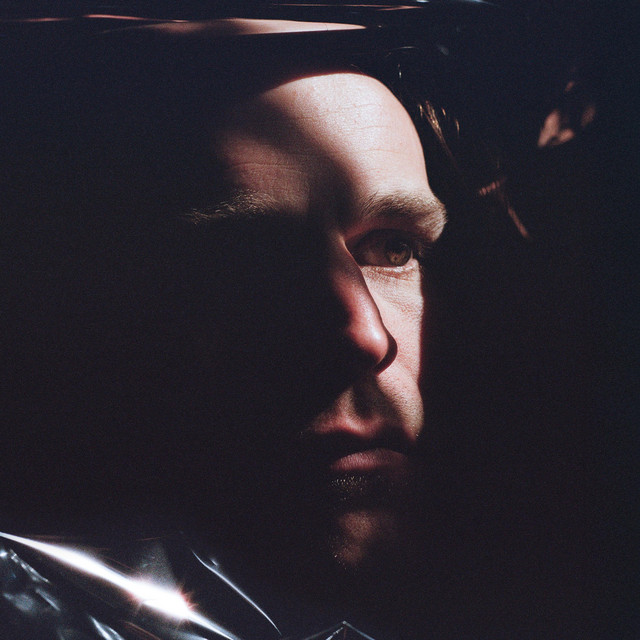
Krill dropped “Purity of Heart” on Lucky Leaves in 2013. The Boston trio made a 7/4 groove feel like something you could hum in a Buick. Evert did exactly that. He kept the Lucky Leaves tape on repeat, circling the lyrics about Grass and Twig and that line about loving yourself enough to love someone else, “to fall through a hole you tore in yourself.” He posted a fully electronic cover to SoundCloud the same year. During the pandemic he rebuilt it with live drums, piano, guitar, and bass. When Ableton started fighting him years later, he bounced the session to tape. Parts overloaded. Things glitched. Happy accidents stuck, including the vocal dropout and lone piano note at 1:36.
He never replaced his original lead. Then Mol Sullivan sang on it, and the song finally felt finished. Evert says it was never meant to be a single. People who heard Photogenic Memory kept naming this one as their favorite. Jonah from Krill, whose band is playing shows again, told him it sounds like Panda Bear. That comparison tracks. You get Animal Collective-adjacent haze without losing the indie-rock skeleton underneath.
Evert is an audio engineer, songwriter, composer, and producer based in Milwaukee. His work lives in the tension between experimental process and emotionally grounded songwriting. He is curious about how sound behaves in actual places, which is why his residencies matter here. He has worked at The Arctic Circle (2022), 360 Xochi Quetzal in Mexico (2018), Denali National Park (2017), ACRE (2016), and Homestead National Monument (2015). Photogenic Memory is built from fragments written across more than a decade, then assembled with hindsight. The album is about how memory distorts, reframes, and sometimes gets it beautifully wrong. Glitch-driven rhythms sit next to post-rock detail and modern-classical structure, but pop instinct still holds the center.
That is the current conversation in this corner of electronic music. Artists are treating old files like field recordings. Tape hiss, software crashes, and unfinished vocals are not problems to hide. They are the story. Evert’s cover is a small case study in that idea: an indie-rock song from 2013, rebuilt through robots, then rescued by analog overload and a guest voice that made him stop tinkering.
If you are sitting on a track that has lived in your hard drive for years, distribution is the part that turns a private obsession into a public one. DistroKid makes it simple to get music onto the major platforms, and you will get 7% off your membership with this link: https://distrokid.com/vip/seven/2058328. It is a practical way to reach more listeners and keep more of what you earn.
What do you hear first in this version, the Krill DNA or the glitch and tape? Let me know in the comments.
