

Some songs start in a studio. “songbird” started in a grocery store.
Nathaniel Paul met an elderly man during quarantine who opened with a line that still lands hard: “Life is hard when you outlive all the ones you love.” They talked. The man felt forgotten by the world, but he had a plan — work on a train and ride it across the planet. That moment became the seed for a track that sits at the intersection of Commercial, Bedroom / Lo-fi Pop, and Indie Pop, and it has already climbed to #16 on the SubmitHub Charts All-Time.
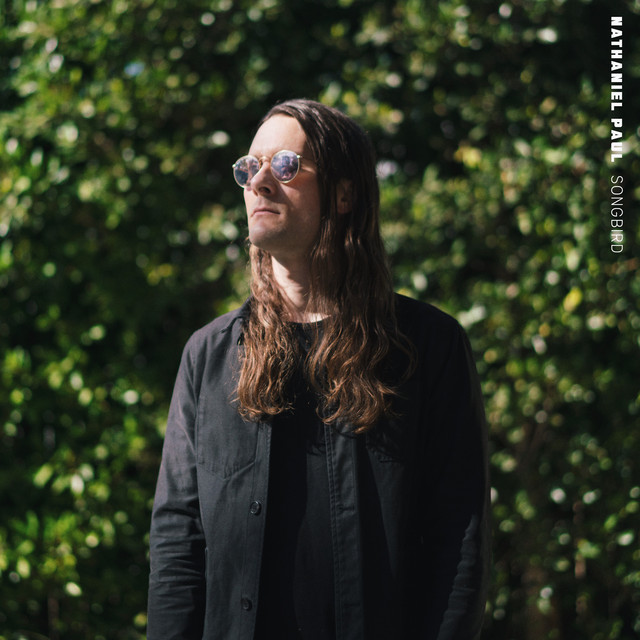
The dream is to go back. The nightmare is that we never can. That is the emotional frame Paul gives the song, and it is not abstract. He connected the man’s story to everything COVID took: small businesses, half-finished plans, the everyday futures people thought they still had. “songbird” does not wallow in that shadow. It tries to walk you toward a little hope while the dark is still in the room.
Paul writes and performs every part of his productions. Born in Michigan City, Indiana, he later moved to New York and has spent years on the road with The Bergamot. His foundation is classical guitar, which shows up less as flash and more as care — warm, careful instrumental color under vocals that cut when they need to. Glide Magazine put it well: he creates “a bold musical statement with cutting vocal dynamics that weave throughout warm and fastidious instrumental color,” a world that feels related to Tame Impala and Mac DeMarco without copying either.
That mix is why bedroom pop and lo-fi pop keep finding new listeners. People are tired of music that sounds like it was assembled by committee. They want something that feels handmade, a little dusty around the edges, and honest about how strange the last few years have been. “songbird” lives in that lane. The production is intimate without disappearing. The arrangement leaves space. You can hear a songwriter who actually played the parts instead of stacking presets until the feeling got buried.
Lyrically the song follows the man on that imagined train: pack the bags, catch a ride, become a songbird, fly again. It is simple on the surface and heavier once you sit with it. What do you do when the people and places that held your life are gone? Where do you go from here? Paul does not pretend he has a tidy answer. He just puts the question inside a melody that wants to lift.
Independent artists who work like this — one person, every instrument, a story that started with a stranger in a store — still need a way to get the music onto the platforms people actually use. DistroKid is one of the cleaner paths. You keep your masters, you get the catalogs live without a label middleman, and if you use this link you get 7% off: https://distrokid.com/vip/seven/2058328. For a multi-instrumentalist who already does the hard part himself, that kind of distribution is less about “making it” and more about not leaving the song sitting on a hard drive.
If you have been living in that post-lockdown haze where everything feels both too loud and too quiet, “songbird” is worth the few minutes. It is not trying to be a stadium anthem. It is trying to be a companion for the version of you that still wonders what happened to all those smaller dreams.
What do you hear in it — the grocery-store conversation, the train, or just the need to fly again? Drop it in the comments.
