

Some songs belong to a place even when they were written somewhere else. America’s “A Horse With No Name” is one of those. Dewey Bunnell wrote it in the English countryside in 1971, staring at desert paintings and remembering childhood drives through Arizona and New Mexico. It became the quintessential Southwest song anyway: open space, a nameless ride, that feeling of being out of the rain. More than fifty years later, Santa Fe producer Tone Ranger has taken the track back to the land that inspired it and given it a new pulse.
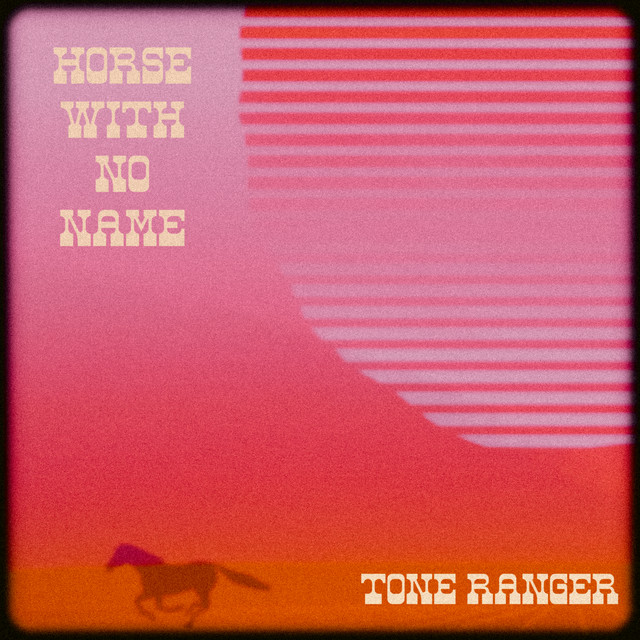
Tone Ranger is Alex Simon, a composer and producer who moved to the New Mexico desert in 2018 specifically to write music that talks to the landscape. His sound has been tagged Electrocana for a reason. It sits between Americana, psychedelic rock, world music, and club electronics without sounding like a mash-up for its own sake. He has opened for Orbital and Thievery Corporation, played Shambhala and Burning Man, scored film, and co-founded Casa Animalia, a boutique studio and label in Santa Fe. A lot of his early work, including the debut album Desert Rose, was written in a van he called the Rolling Studio while living in national parks.
This cover is personal in a way most remakes are not. Simon has said the original always felt resonant with his own years in the high desert. He recorded it with his wife Gabriella, who is from England, which quietly restates the original’s odd geography: a desert anthem born in Britain, now recast by a New Mexico artist and an English partner. The publishers signed off. That matters. This is not a bedroom remix floating without permission. It is an official cover.
What he does with the song is what you would expect from someone who treats landscape as a collaborator. He talks about horses galloping, soft harmonies, and a lot of open space to play with. The bones of Bunnell’s melody stay recognizable. Around them he builds the kind of electronic arrangement that can live on a dance floor without flattening the mystery. Indie dance and Americana do not share a playlist every day, but the combination makes sense here. The original already had room in it. A two-note verse, wide sky, a story that is more atmosphere than plot. That is useful raw material if your job is turning desert quiet into movement.
Covers of this song have drifted toward folk, country, and chill-out over the years. An electronic version rooted in the actual Southwest is rarer. Dance music has been having a strong year on streaming, and indie dance keeps pulling older songs into club tempo. Most of those records treat the source as a hook. Simon treats it as a place. He has spent a decade wandering plateaus, forests, and borderlands and writing music that tries to sound like those places. A 1971 folk-rock standard about riding into emptiness is almost too on-the-nose for him, which is probably why it works.
He called the original a psychedelic desert masterpiece. Fair. His version does not try to out-classic the classic. It just puts the horse on different ground: kick drum instead of campfire, electronics instead of twelve-string, still the same heat and distance. If you already know Tone Ranger from Desert Rose, Follow the Sun, or last year’s Confluence, this sits neatly in that world. If you only know the America original from classic-rock radio, it is a useful reminder that a song this spacious can still travel.
What do you think of this one? Does an official electronic cover of a 1972 number one feel like a gimmick, or does it actually belong in the desert it keeps describing? Drop a thought in the comments.
If you are an independent artist sitting on a finished track and wondering how to get it onto the same platforms everyone else uses, DistroKid is still one of the simpler routes. You keep your masters, you get the music onto the major stores, and you can take 7% off membership with this link: https://distrokid.com/vip/seven/2058328. Handy if you would rather spend the afternoon writing than filling out distributor forms.
