
There’s a specific kind of bass that doesn’t just hit the floor—it pulls the whole room a little closer to something older. Aazav and Sophia Rayne’s The Edge sits right on that line. It moves as a dark pop song carrying clear bass elements, locked at 140 BPM with a half-time feel that keeps the groove weighty and unhurried. Two voices sit in sultry, soulful harmony: Kai Altair and Sophia Rayne. The track builds with moody, atmospheric pressure before it lands in a massive bass drop. Deep vibes, still heavy-hitting, and built for playlists that want both vocal presence and low-end weight.
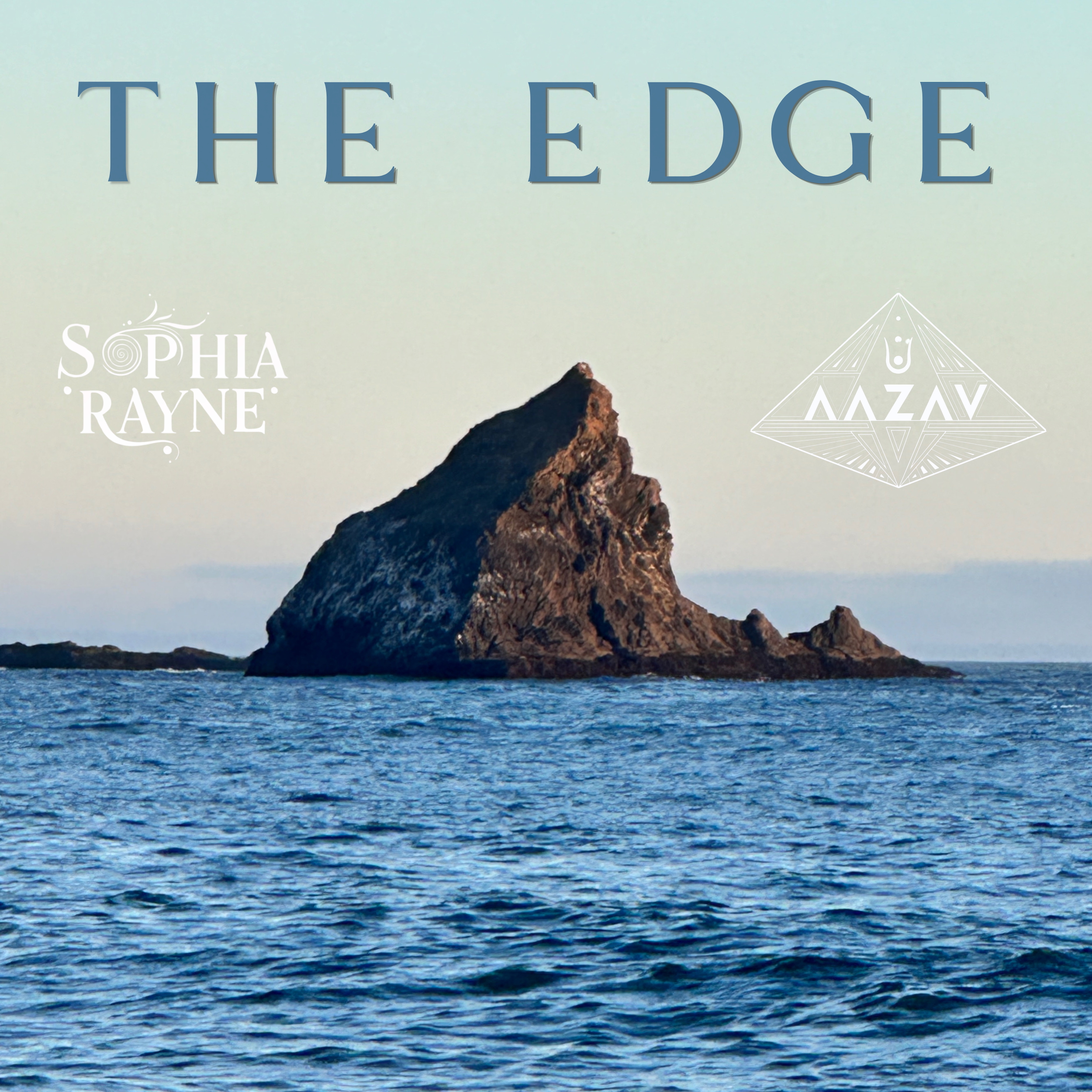
Aazav (ah-ZAHV) is the project of Kai Altair and Haj i Ji. The name points to a state of spiritual dignity reached through ecstatic practices, dance, drumming, and low-frequency oscillations. Their sound draws from ancestral vocal traditions and deep woods sensibilities, landing as a convergence of medicine melodies and global organica—a call toward the central fire of remembered futures. The Looking Stone, their debut album, arrived with remix support from David Starfire, Govinda, Kaminanda, Drumspyder, and Living Light. On the dance floor the duo’s sets weave the primal with the modern mythic: deep bass meeting luminous vocals and atmospheric journeys. They perform together and separately across dance communities from Hawai‘i to New York City, Los Angeles to Salt Lake City, opening portals at sunrise gatherings or descending into night-time ritual.
The Edge was written with Sophia Rayne after a night of deep ritual and prayer, then recorded at On The Perch studios in Northern California. Sophia Rayne works in conscious pop and healing music, bringing a soulful, spiritually oriented vocal presence into the collaboration. The result keeps the half-time groove intact while the dual voices stay close and present through the build and the drop. It is atmospheric without losing the heavy hit, exactly the kind of track that fits rooms looking for vocalists inside bass music rather than beside it.
Bass music keeps making space for these hybrid textures—experimental glitch-leaning production meeting organic and ancestral threads, half-time feels giving dancers room to settle into the weight instead of only sprinting through it. The Edge fits that current without forcing the point. The groove stays functional, the drop is decisive, and the harmony gives the low end a human center.
Independent artists working in this lane know distribution is part of keeping the work moving. DistroKid (affiliate link) makes it straightforward to get tracks onto major platforms, and the link above gives 7% off membership. It is a practical way to reach more listeners while holding onto more of the earnings.
What do you think of this dual-vocal bass journey on The Edge? Drop your thoughts in the comments.
