

A chair in the sand should not start a national argument. In the Dominican Republic it did, and Aljadaqui turned the whole thing into a love song.
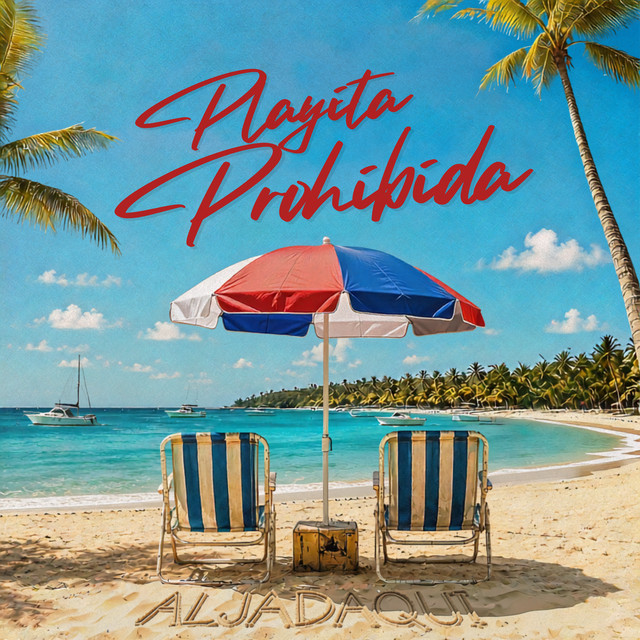
Playita Prohibida, out September 18, sits in Latin pop and reggaeton, and it comes from a real afternoon in Juan Dolio. Vocalist Mariano Lantigua was there with family when he was told he could not use chairs and a shelter facing the sea. He stayed seated, filmed what happened, and the clip traveled. Listeners said they had lived the same thing. Radio, television, and social feeds argued about how far a citizen’s right to the coast actually goes. Tourism minister David Collado publicly restated that Dominican beaches are public. While the country debated umbrellas and access, Lantigua was already writing.
That is the hook, and it is a useful one for anyone following new Latin pop in 2026. Reggaeton and Caribbean pop still travel on stories people already recognize. A dembow pulse and a singable hook can carry a private moment further than a press statement. Aljadaqui, one of the emblematic groups of Dominican pop rock, did not write a protest record. Lantigua has been clear about that. He wanted a love story, because beaches are also family, meetings, memories, and the kind of afternoon that stays with you.
The lyric does exactly that. Two strangers meet on a pretty little beach. She is walking alone, she notices him, and luck supplies two small chairs. They sit and wait for sunset. The sun gets jealous and toasts their skin. He has no shelter to offer. Then the chairs are taken, the little beach is declared off limits, and the sunset is ruined. A sour-faced official, nicknamed señor Calamardo in the lyric, does not want people on the sand and does not want her beside him. The answer is simple and very Dominican: the beach is a gift, and he was born in paradise.
From there the song becomes a map. Rincón to Caletón, El Hermitaño to Cabarete, Cayo Arena to Cosón, lunch of pescadito and concón in Macao, a nest for the romance in Bahía de las Águilas, then El Morro, Cabo Rojo, Esmeralda, Frontón. If one shore closes, they move to the next. The chorus keeps circling the same ache: loco for her lips, unable to kiss them, heading for another little edge of sand where he might sit down and win her over. It is flirtation with a civic aftertaste, not a speech.
Musically it is built to travel. Lantigua wrote the lyric and the music and produced the track. Ariel Sánchez plays guitar and bass. Miranda and Marla Lantigua add vocals. Henry “El Creador” Calderón mixed and mastered it. Before the digital release, the band tried the song in front of more than 4,000 people at Parque Colón in Santo Domingo. That is a useful test for this kind of Latin pop: if a crowd that size can sing a beach story back at you, the hook is doing its job.
The wider context helps. Public-beach arguments keep surfacing across the Caribbean whenever hotels, clubs, and local families share the same strip of sand. Playita Prohibida does not litigate that fight. It asks what gets interrupted when access gets tight: a conversation, a first look, a sunset, a memory. For reggaeton and Latin pop playlists that already lean on summer, romance, and place names, that is a stronger frame than a slogan.
If you are an artist sitting on a story this specific, distribution is the unglamorous half of the job. DistroKid makes it simple to get tracks onto major platforms, and this link takes 7% off membership: https://distrokid.com/vip/seven/2058328. More listeners, and more of the earnings stay with you.
What do you think of this take on a beach ban, love song instead of protest? Drop it in the comments.
