

Future bass never really left the room. It just stopped shouting. After the mid-2010s rush of wobbly chords, pitched snares, and glittery drops, the genre spent years getting filed under nostalgia. Then the conversation started up again. A decade on from Flume, ODESZA, San Holo, and Louis The Child, people are asking whether future bass has another life in it. CRUDANLU’s Frgmnts arrives right in the middle of that question, and it does not sound like a tribute act.
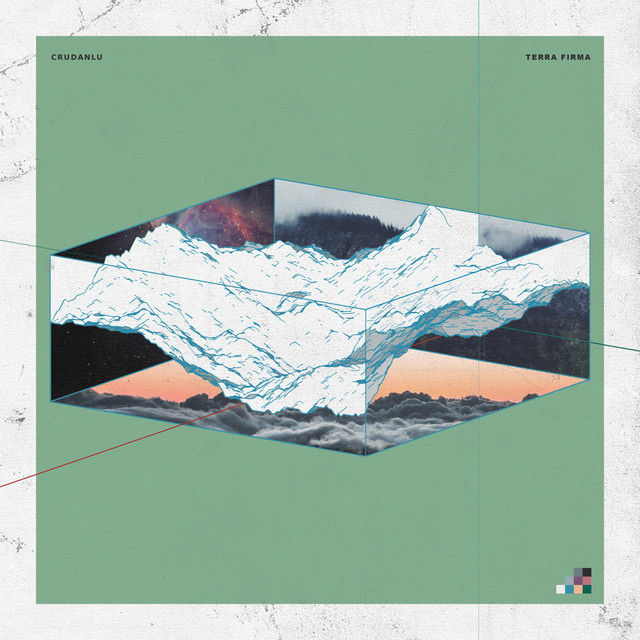
The Miami-based producer and live performer has been building toward a point of view for a long time. The bio that came with this submission, written by Kat Bein, frames the work as emotive experimentations with a story more than 16 years in the making. That is not a marketing line you can fake with a preset pack. Future bass lives or dies on detail. The supersaw that blooms a half-step late. The chord that feels warm until the rhythm tilts. The bass that swings instead of simply hitting. Frgmnts sits in that lane: future bass with left-field textures and atmospheric melodies, the kind of electronic music that wants a body on the floor and a slightly unsettled mind in the headphones.
CRUDANLU is a first-generation American who started on bass guitar in jazz and metal bands, then moved into songwriting inside the electronic dance scene. Nearly two decades of genre-hopping came before the mix that now defines him. Nicaraguan and Cuban background folded into the atmospheric side of electronic production. Relatable, then unpredictable. Beautiful chaos, held together just long enough to feel like a song.
He has said, through that same write-up, that he spent years reverse-engineering the production techniques of the outliers who shaped him. Flume’s wonky grandeur. SOPHIE’s effervescent erraticism. Bonobo’s warm melodies. Flying Lotus’s off-center swing. You can hear why those four names sit together. Future bass, at its best, is not one trick. It is trap-leaning drums and half-time bounce set against chords that shimmer, often somewhere between 130 and 170 BPM, with vocal chops or melodic fragments doing the emotional work a full lyric might do in pop. The pioneers were Rustie and Hudson Mohawke. The mainstream door opened wider with Flume’s remix of Disclosure’s You & Me. What CRUDANLU seems to be chasing is the version that still has teeth: not festival wallpaper, not a clean nostalgia loop.
The alias itself is recent. He adopted CRUDANLU in 2023 to mark a clearer ascent, an artist with a point of view rather than a producer still auditioning styles. That matters for a track called Frgmnts. The title reads like a method. Pieces. Scraps of melody. Rhythmic ideas that do not line up until they suddenly do. Future bass has always been good at that trick. A riser made of filtered noise. An arpeggio that sounds almost too pretty. A drop that rearranges the bar so your body catches up a beat late. When it works, the chaos feels personal instead of decorative.
There is also a live-performer side to this story, which is easy to skip when a track only exists as a file. Jazz bass and metal guitar do not vanish when someone opens a session in a DAW. They show up as swing, as dynamic range, as a refusal to let every element sit perfectly on the grid. Bonobo’s warmth and Flying Lotus’s lurch are useful references here because both treat electronic music like an ensemble, not a template. SOPHIE’s influence is the sharper edge: sound design that is allowed to be strange, even pretty-strange, without apologizing.
If you are chasing new future bass in 2026, Frgmnts is a useful test. Does the melody stick after the drop? Do the textures feel chosen, or just stacked? CRUDANLU’s background suggests the answer is chosen. First-gen, Miami, bass guitar, metal, jazz, then years inside dance music, then a name that only arrived once the sound had a center. That is a long road for a genre people sometimes treat like a 2016 costume.
Independent artists in this lane still have the same practical problem everyone else has. A finished track does not move itself. Distribution is the unglamorous half of the job, and it is the half that decides whether a late-night future bass idea ever reaches a playlist, a DJ crate, or a listener who was not already in the group chat. DistroKid makes it simple to get tracks onto major platforms, and you can take 7% off your membership with this link: https://distrokid.com/vip/seven/2058328. For producers who are still stitching fragments into something that finally feels like theirs, that is a clean way to keep more of the money and reach more of the room.
What do you think of this artist’s sound? Is future bass actually coming back, or did it never leave? Let me know in the comments.
