

Commercial pop is crowded with songs that sound tough and say very little. Jenny JAM’s Toy Proof is the opposite. The London-born, Los Angeles-based soul-pop artist wrote it in the middle of a life that had already come apart, and the track still lands like a clean boundary rather than a diary dump.
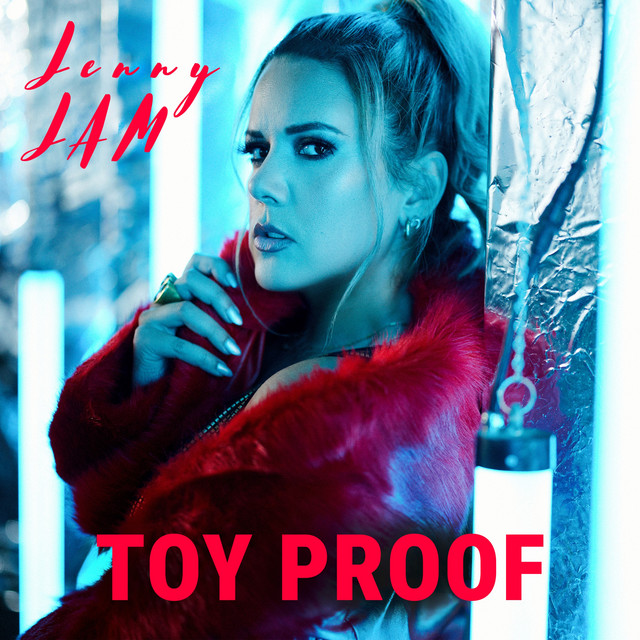
The story behind the single is blunt. A relationship ended just as her mother’s leukemia returned. Jenny went back to the UK to become a full-time caregiver after a bone marrow transplant, and the person she thought would stay did not. Toy Proof is about that gap: the self-delusion, the disappointment, and the slow recognition that the relationship may never have been what she believed. She has described it as a story of resilience, of rising from the ashes, breaking free from people who emotionally drain you, and refusing to accept being treated badly. In a Twisted Male Mag interview she said the chorus arrived while she was driving to pick her mum up from hospital in Bristol, and she had to pull over to voice-record it. That detail explains the song’s temperature. It is not written from a distance.
Musically, Toy Proof sits in the Commercial lane she submitted, but the blend is wider than radio-pop shorthand. Soul, pop, jazz, and classic rock sit under a vocal that moves between honey and grit. Reviews of the single have pointed to piano, percussion, and a delivery that sounds like someone reclaiming the room rather than asking for it. The official video, shot at California’s Salton Sea and released with the single on 18 September 2026, matches that mood: a desert, a door, a woman walking through both. It is the last preview of her debut album Trains, Planes and Airports, due 9 October, with a London release show set for 15 October.
The album title fits. The record was tracked in Los Angeles, Delaware, and Birmingham, with Grammy and Emmy Award-winning producers Herb Middleton (known for work with Mary J. Blige and Al Green), Ikuma Matsuda, and 5am. Earlier singles already sketched the map. Prove Who was recorded on Frank Sinatra’s microphone at Capitol Records, later landed on a Times Square billboard, and was sync-licensed into the British gangster film Bermondsey Tales, which she also produced under her legal name, Jennifer Moxham. Better Than You, a raw anthem about surviving abuse and reclaiming power, reached No. 33 on the U.S. Mediabase charts and picked up coverage from Earmilk and PopDust. Friendzoned, written on a Hampstead rooftop during Glastonbury, shows the lighter side of the same pen. Her own line on the record is simple: no matter how dark the story, there is always a positive twist.
The biography is not a press-kit invention. She came up through London musical theatre, trained as a vocalist, taught herself piano, and speaks multiple languages. Acting and film work under Jennifer Moxham give the songs a cinematic frame. Live, the resume is unusually specific: Eternal Love at the top of New York’s Freedom Tower for the 20th anniversary of 9/11, a set at Dubai Fashion Week, and a performance at NASA’s Kennedy Space Center. Influences she names — Amy Winehouse’s honesty, Fleetwood Mac’s classicism, The Beatles and The Rolling Stones — show up as attitude more than imitation.
That is why Toy Proof works as a commercial soul-pop single in 2026. The charts are full of empowerment language. Fewer records are built from a caregiver’s drive to the hospital and a decision not to keep a person who vanished when the lights went out. Independent artists who write at that level still have to get the song onto the platforms where those listeners actually are.
If you are an artist trying to do the same, DistroKid makes it simple to distribute your tracks to major platforms — and you get 7% off your membership with this link: https://distrokid.com/vip/seven/2058328. It is a practical way to reach more listeners and keep more of what you earn.
What do you think of Jenny JAM’s sound — soul-pop with a hard edge, or something closer to classic rock in a pop frame? Let me know in the comments.
