

There’s something quietly powerful about the final track on an artist’s debut statement. It is the song that has to hold the whole story together once the lights come up. For Indian-American artist Kataria, that song is “Couch,” the closing track of her six-song EP Born Again.
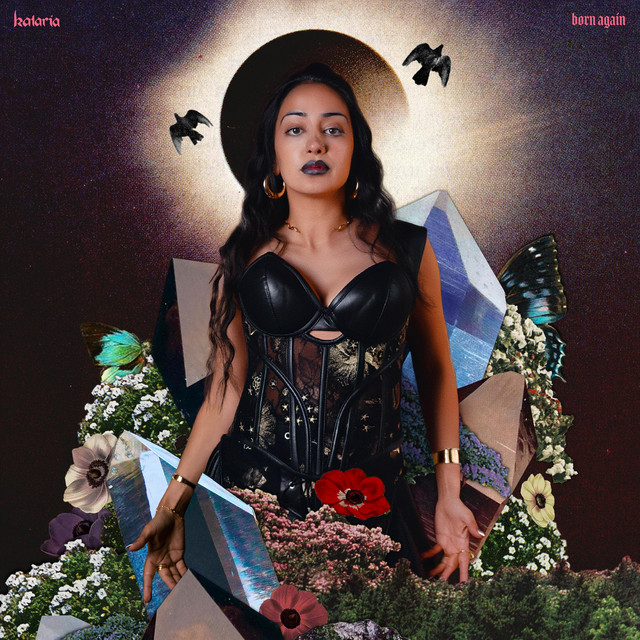
The record arrives as the culmination of one of the more unusual comeback stories in recent pop. As a teenager performing at the Arizona State Fair, Nisha Kataria caught the attention of Michael Jackson’s team. Months later she was living and recording at Neverland, apprenticed by the King of Pop himself. She toured Europe while searching for her own sound. After Jackson’s death she stepped away from music completely, letting the stage go dark. Born Again marks her return under the name Kataria—a bold reintroduction shaped by that history but fully her own.
“Couch” sits at the end of that journey. The song is about reclaiming the things others once used against her: power, sexuality, vulnerability, privacy, and ambition. It explores what those same forces feel like when they are offered willingly through love and trust instead of taken or weaponized. In the wider landscape of indie pop and dream pop, where intimacy and atmosphere often do the heavy lifting, the premise lands with unusual clarity. The title itself points toward something ordinary—a piece of furniture, a private space—yet the emotional territory is anything but casual.
Kataria’s wider body of work on the EP has already shown a knack for turning personal history into forward motion. Earlier singles such as “I Earned It,” “Trophia,” and the title track “Born Again” sketched an arc of survival, confrontation, and purpose. “Couch” feels like the moment the armor comes off. The indie-pop and dream-pop framing suits the material: spacious enough for reflection, melodic enough to stay with you, and grounded in the kind of emotional directness that has been thriving in the genre over the past few years. Listeners drawn to artists who treat personal reckoning as the main event rather than a side note will find a natural home here.
What stands out is the framing of choice. So much contemporary pop still circles the idea of reclaiming narrative after outside forces have defined it. Kataria’s version ties that idea specifically to trust—the difference between having parts of yourself used against you and choosing to share them with someone who will hold them carefully. That distinction gives the song its center of gravity. It is less about grand declarations and more about the quieter, harder work of deciding who gets access and on what terms.
The larger context only sharpens the point. After years of silence following one of the most high-profile mentorships in modern music, the return itself is already a statement. Born Again functions as both a collection of songs and a public recalibration: pop that draws on a singular past without being trapped by it. “Couch” closes the EP by asking what comes next once the reclamation has started. The question the artist has been circling—what is “enough,” and who gets to decide—settles here into something more intimate and relational.
For independent artists navigating their own versions of these questions, distribution still matters. Getting the music onto the major platforms cleanly and keeping more of the earnings is foundational. DistroKid (affiliate link) handles the heavy lifting so the focus can stay on the work itself, and the link above includes a 7% discount on membership.
“Couch” leaves the listener with the sense that the most meaningful kind of power is the kind you choose to share. It is a fitting final note for an EP built around transformation.
What do you think of this artist’s sound? Let me know in the comments!
