

There is a reason piano house never really leaves the floor. A stab of keys, a bassline that walks instead of slams, and a vocal that sounds like it was written for a packed room rather than a playlist thumbnail. Max Winfield’s Why We Dance, written with house vocalist Jessica Hammond, is built exactly for that moment. It is pitched as an end-of-summer piano house banger, and the writing matches the brief: original piano keys, a driving bassline, and a vocal that keeps pointing back to the floor.
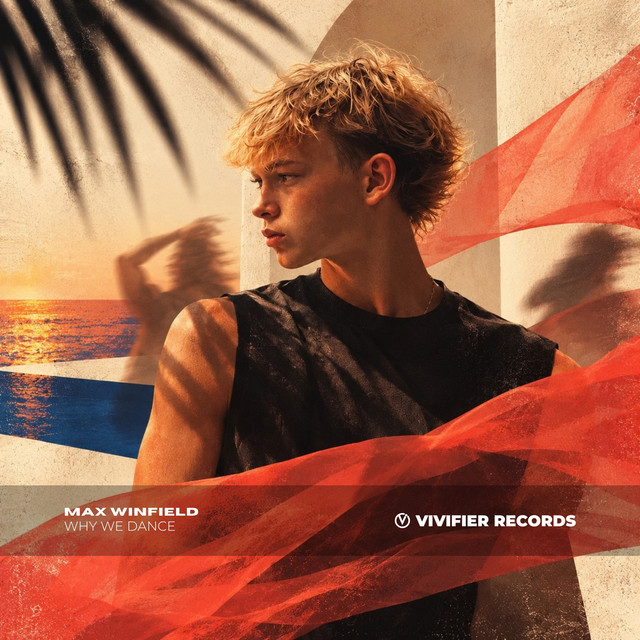
Winfield is a UK DJ, producer, and songwriter from Cirencester whose sound sits between dance pop, old-school house, and EDM. He came up on piano, blues, and jazz, then pushed that musical background into electronic records aimed at clubs. That mix shows up in the way Why We Dance is put together. It is not a wall of drops. It is song-first house, the kind of record DJs still reach for when a room needs a lift rather than another reset.
The story behind the release is specific. Winfield was picked up by the Toolroom team at an Academy event at Fabric, which led to a record deal with Fool’s Paradise and studio time alongside Mark Knight. Support has followed from BBC Introducing, with plays on Kiss FM and Capital Dance. Public credits also place him on a Toolroom Academy Artist Development Scholarship in 2025, with DJ dates that include ADE Amsterdam, Hï Ibiza, and festival sets at Shindig and Valley Fest. Why We Dance landed on Vivifier Records on 2 October 2026, clocking in around 5:28 at 129 BPM in G# minor. That tempo is classic vocal-house territory: fast enough to move a Saturday, slow enough for a singer to actually land a chorus.
Hammond is the other half of the record. Winfield describes her as a power house vocalist, and the lyric sheet backs the billing. The hook is blunt on purpose.
That’s why we dance This is the reason That’s why we dance You could never understand
Around it, the verses refuse the usual industry pitch. “We don’t do it for the numbers / We don’t do it for the chance / Yeh we do it for the passion / That’s the reason why we dance.” Earlier lines set up the same idea from the other side: you can learn the rhythm and rewrite every line, but you still will not know the feeling of a heart and a beat lining up. For a piano house record, that is the whole argument. The piano is the emotional instrument. The vocal has to mean it, or the keys just become decoration.
That argument also fits where house is right now. Old-school piano house never fully left DJ pools, and labels built around songcraft, Fool’s Paradise among them, have been pushing soulful, vocal-led house back into club sets. Dance pop and EDM playlists have been borrowing the same tools: a clear chorus, a four-on-the-floor kick, and a hook you can sing before the second drop. Why We Dance sits in that overlap. It is functional for a warm-up or a late peak, and it is also a song with a point of view. Passion over metrics is an easy slogan. Here it is the actual chorus.
If you are an artist trying to get a record like this onto Spotify, Beatport, and the rest of the stores without losing the plot, distribution still decides whether anyone outside your group chat hears it. DistroKid keeps that part simple, and you can take 7% off membership here: https://distrokid.com/vip/seven/2058328. Useful if you would rather spend the week on piano stabs and vocal comps than on upload forms.
Why We Dance is on Spotify now. If piano house is your lane, this is one to test on a real system, not just laptop speakers. What do you think of this kind of vocal-led house against the harder club stuff? Drop it in the comments.
