

Pop has always been good at dressing up a wound so it can live on the radio. That is the lane Dublin-based Lex Bucha is working on Faithless (Sacrifice): commercial pop with a sad-boy spine, the kind of song that wants a chorus you can sing and a story you cannot shrug off.
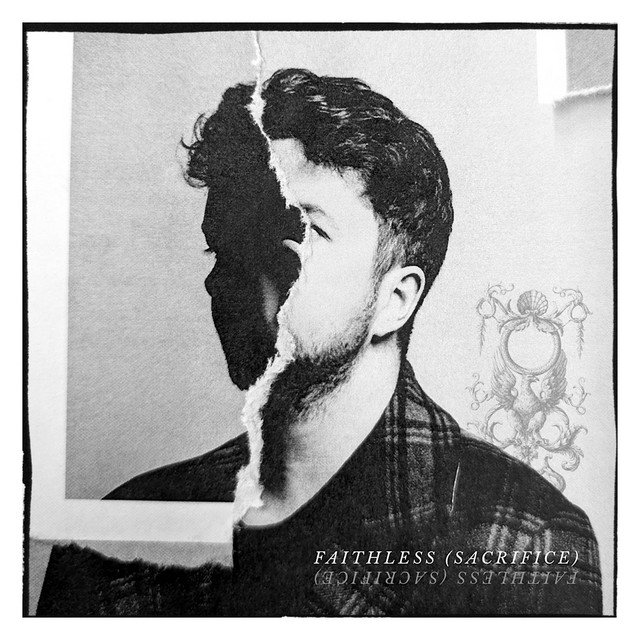
Bucha spent years writing songs for other people before putting his own name on the credits. That background shows. The track is built like a pitch that already knows how radio, playlists, and late-night headphones work. The mood he sent with the submission is Commercial, and the reference point he names is Sad Boy Pop in the Hurts tradition: big feeling, polished surface, no interest in hiding the bruise.
He is clear about what the song is for. Faithless (Sacrifice) came from times in his life when he was labelled bad, evil, or the villain. Growing up gay in a cult-like church, he wrote from the moment of breaking out: taking the word that was meant as a sentence and wearing it as a way back to himself. That is not a vague “personal journey” line. It is the plot. If you have ever been told that the honest version of you is the problem, you already know why a title like this lands.
Sad boy pop keeps circulating for a reason. Listeners still want songs that sound expensive and feel private. Artists in that lane — cinematic synth-pop, radio-ready hooks, lyrics that read like a late confession — keep proving that vulnerability sells when the production does not collapse into diary mush. Bucha is aiming at that collision on purpose: emotion first, format second. He says he wants to pull feeling from a lifetime of ups and downs. The submission backs that up. Raw lyrics are the selling point, not an afterthought.
You do not need a full autobiography to hear why this one matters in 2026. Queer artists are still doing the work of turning church shame, family scripts, and public labelling into songs that can sit next to more polished commercial pop. Faithless (Sacrifice) belongs in that conversation without needing to announce itself as a manifesto. It is a pop single with a specific origin story, and that is enough.
Bucha’s own framing is useful here. He talks about captivating an audience with lyrics that connect, after years of writing in the background for other voices. Stepping in front of the song changes the risk. When you write for someone else, the confession can stay at a distance. When it is your name and your church and your “villain” tag, the commercial sheen has to carry real weight. That tension is the interesting part of the record: radio instincts wrapped around a story that was never designed to be radio-friendly.
If you are coming in cold, start with the title and the bio he attached. Faithless. Sacrifice. A kid told he was the problem, then an adult deciding the problem was the room he was raised in. The rest is craft: a commercial pop structure meant to make that story travel.
What do you think of this kind of sad boy pop when the lyric is this specific? Does the commercial frame help the story land, or do you want it rawer? Drop it in the comments.
Independent artists who write this close to the bone still need the boring infrastructure: getting the track onto Spotify, Apple Music, YouTube, and the rest without giving the catalogue away. DistroKid keeps that part simple, and you get 7% off your membership with this link: https://distrokid.com/vip/seven/2058328. Reach more listeners. Keep more of what you earn. Then go write the song they told you not to write.
