
Berlin after midnight has a particular kind of speed. Streets empty, lights smear, and whatever you are carrying inside you either burns off or hardens. Martin Rott wrote kinetic theory, Pt. II as a soundtrack to the terrifyingly fast nocturnal bike rides his son likes to take through the city center, where angry madness gets flipped into optimistic energy. That is not a metaphor he added later. That is the brief.
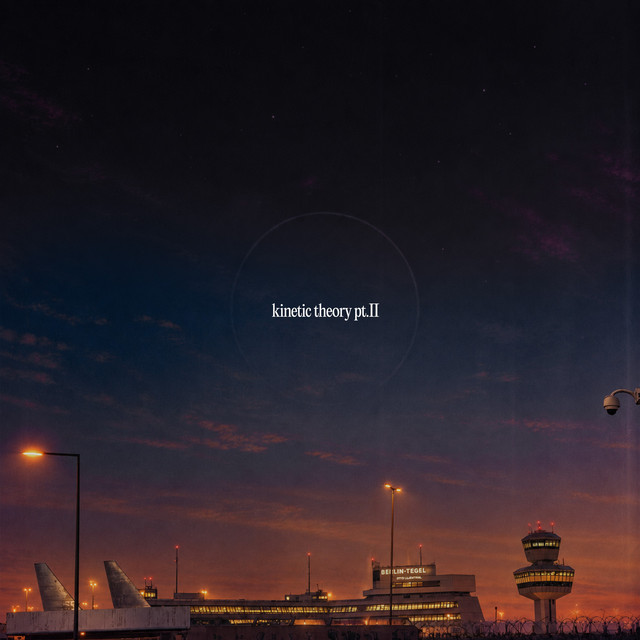
Pt. I came out of lockdown dreams of being able to move again. Pt. II is rougher. It stirs up inner frustrations from a hardened reality and channels that fury into analog electronic movement. An unprocessed string quartet sits in the same need to press forward. Heritage and playfulness have always been close in Rott’s work; here the heritage is not polite. The strings do not decorate the electronics. They argue with them, then ride the same current.
If you have been following the recent wave of cinematic electronica that refuses to sand off the edges, this sits right in that conversation. Think of producers who treat live strings as another analog source rather than a prestige add-on. Rott has the resume to make that choice feel earned rather than fashionable. He has worked as a multi-instrumentalist, writer and arranger for German and Austrian billboard acts, and composed music for hundreds of TV episodes, movies and award-winning feature films. Solo releases from 2020 onward led to collaborations with KLUR, Luchs, Illuminine, L’aupaire, VARLEY and Marius Nitzbon, more than four million streams, and an LP, Utopian Traveler, that featured the London Contemporary Orchestra and got played on BBC 6 by Ólafur Arnalds. Since 2025 he has also been part of Manchester’s melancholic symphonic indie-rockers THE SLOW SHOW.
That mix matters. Parents who are classical violinists, drums from age six, Berklee, Enschede, a jazz diploma in Mannheim, a production degree from Popakademie, years scoring Tatort and features, then a piano next to the production desk. You hear all of that in how Pt. II treats motion. The electronics feel analog and in-your-face. The quartet stays raw. Berlin’s cultural idiosyncrasy, the way the same force can come out as Symphony Hall or a bike tearing through the center at night, is the point he is making without a speech.
I will not pretend I sat with a lyric sheet. This is instrumental electronica. The story is in the pressure of the groove, the way the strings lean forward instead of blooming, and the sense that the piece is trying to keep up with someone who will not slow down. If you like music that sounds like a city at 2 a.m. with the windows open, this one earns the ride.
Independent artists who work at this intersection of score, live strings and club-adjacent electronics still need a clean path to DSPs. DistroKid makes that part simple, and you get 7% off your membership with this link: https://distrokid.com/vip/seven/2058328. More listeners, more of your earnings kept. That is the unglamorous half of staying in motion.
What do you hear first in kinetic theory, Pt. II, the electronics or the quartet? Drop it in the comments.
