

Bedroom pop has always lived in that half-lit space between a late-night voice memo and a finished record. You hear the room. You hear the grain. You hear someone trying to catch a feeling before it cools. Noah Wood$ steps into that space with Lake On Fire, a track tagged Bedroom / Lo-fi Pop and shaded with Indietronica and French / Filter House. The title already does half the work. Water and heat. Stillness and something that will not stay still.
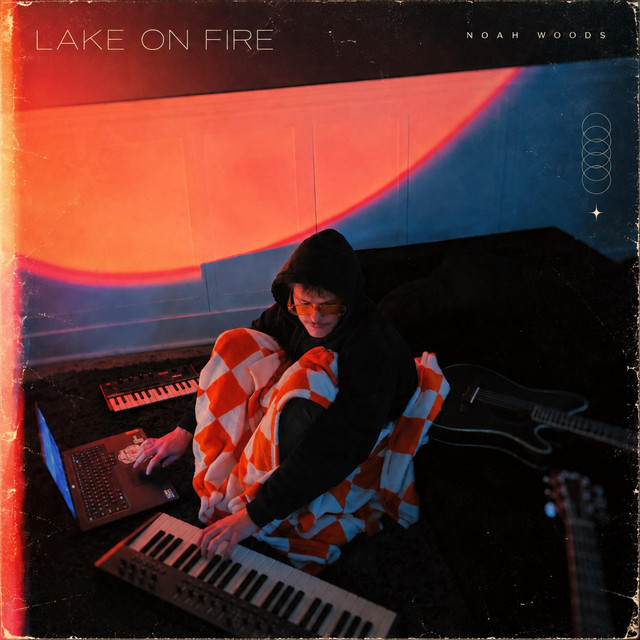
What makes this lane interesting right now is how those extra tags sit together. Lo-fi pop used to mean tape hiss and a cheap mic. Filter house used to mean a disco loop with the high end swept until the groove felt like it was breathing. Indietronica sits in the middle: electronic enough to move, human enough to stay close. Lake On Fire lives in that overlap. It is not trying to be a peak-time club weapon. It is trying to feel like a private moment that still has a pulse.
The official upload lists Noah Wood$ on vocals and Lucas Sabbag as studio producer, with the track arriving through DistroKid. That last detail matters more than people admit. A lot of bedroom and lo-fi work never leaves the hard drive because distribution still feels like paperwork. When a song like this does leave the room, you hear why the format keeps winning playlists: it sounds intimate without sounding unfinished.
Musically, the pitch points you toward texture first. Bedroom and lo-fi pop usually lean on close vocals, soft drums, and chords that feel a little worn in. French and filter house add motion: filtered stabs, a bassline that rolls instead of slams, a sense that the mix is opening and closing like a window. Indietronica keeps the arrangement from getting too polite. You get electronics with personality, not just a preset pad sitting under a vocal.
If you have been following how lo-fi pop and filter-house ideas keep crossing into each other in 2026, this makes sense. Listeners want songs they can play at 1 a.m. and still feel the kick. Artists want records that sound homemade without sounding accidental. Lake On Fire sits in that demand. The title suggests heat. The genres suggest haze. Together they promise a track that smolders instead of exploding.
I will not invent a life story around the name. What we have is the song, the credits, and a clear lane. That is enough. The work is the point. If the vocal sits close and the production leaves a little air in the mix, the track does what this style is supposed to do: it makes a small room feel bigger than it is.
What do you think of this artist’s sound? Does Lake On Fire land more as late-night bedroom pop or as something that could slide into a filtered house set? Let me know in the comments.
Independent artists who want that same path from a finished file to Spotify, YouTube, and the rest of the usual platforms already know the bottleneck is distribution. DistroKid keeps that part simple, and you get 7% off your membership with this link: https://distrokid.com/vip/seven/2058328. It is a practical way to get the music out and keep more of what it earns.
