

In a world that feels permanently stuck on doomscroll mode, there is something quietly radical about a song that chooses sunshine anyway. That is exactly what New York City duo The Gershwin Brothers offer on “Mr. Happiness,” a warm, instantly inviting track from their sophomore album Doomscrollin’. Blending folk rock, chamber pop, and indie pop with a clear 1960s glow, the song feels like a gentle reminder that optimism does not always need a neat explanation.
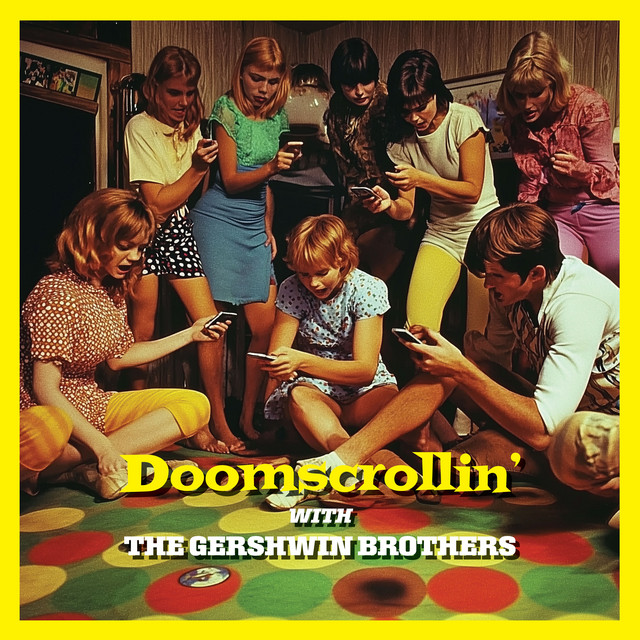
Lane Steinberg and David Foster have built a reputation for classic songcraft that stands out in an era of rapid-fire bedroom productions. The pair met in 2017 at the Treehouse, an East Village hangout where songwriters and players traded tunes late into the night. Their first musical moment together was a cover of the Beach Boys’ “Wild Honey.” From there they started writing originals, first for other vocalists, then stepping into the spotlight themselves. Steinberg previously played in The Wind, whose debut earned praise in Rolling Stone, and has worked with everyone from R. Stevie Moore to calypso legend Mighty Sparrow. Foster has long been part of the New York pop scene with his band Bubble and regular appearances at the Losers Lounge series. Together they draw from a deep well of influences—George and Ira Gershwin, the Beatles, the Beach Boys, Buffalo Springfield, the Kinks—and turn those references into something that feels both familiar and freshly their own.
“Mr. Happiness” sits comfortably inside that world. Acoustic guitars and clear, defined melodies sit under vocal harmonies that lean into Everly Brothers territory. The production, handled by Mike Fornatale (whose credits include work connected to the Left Banke, Moby Grape, and the Washington Squares), keeps everything warm and intimate, as if six musicians were simply playing in a living room. The result is the kind of chamber-pop brightness that recalls California folk-rock optimism without ever sounding like pure pastiche.
Lyrically the song follows a character who remains cheerful no matter what arrives—storms, loneliness, lost wealth, or the rumors people invent about him. Listeners keep trying to explain the happiness: maybe a spiritual experience, maybe a hidden past, maybe something else entirely. He simply continues living. The track never solves the mystery, and that is the point. It suggests that sometimes lightness itself can be a quiet answer to chaos. In the context of an album titled Doomscrollin’, the song lands as a playful, slightly ironic counterweight—vintage pop swagger meeting everyday observation with a lot of heart.
What makes The Gershwin Brothers compelling is how naturally they stitch their influences together. They talk about communicating in musical shorthand—“put an Animals organ on there” or “play a Skip Spence guitar part”—and the results feel seamless rather than studious. Doomscrollin’ as a whole is full of big hooks, sticky harmonies, folksy guitars, and the occasional garage-rock punch, all delivered with the comfort of something well-worn and the spark of something still alive. “Mr. Happiness” is one of the clearest examples of that balance.
If you are an independent artist looking to get your own music onto the major platforms, DistroKid makes the process straightforward and lets you keep more of what you earn. You can get 7% off your membership with this link: https://distrokid.com/vip/seven/2058328. It is a practical way to reach more listeners without the usual headaches.
What do you think of this sunny little parable set to classic-sounding folk rock and chamber pop? Drop your thoughts in the comments—does “Mr. Happiness” land for you the way it does for me?
